







Over 1 in 4 teens between age 15-17 have experienced dating violence, but most don’t feel comfortable talking about it.


Diary of an Abusive Relationship
Ever had a relationship that ran hot, then cold, then hot…and cold again?
It’s normal for relationships to have ups and downs. Emotions are complex and no one is perfect!
But abusive relationships often have a pattern of behaviour that we can see, and it can tell us when it may be time to get help or end a bad relationship.
Follow along the cycle:
Click a phase below to see details
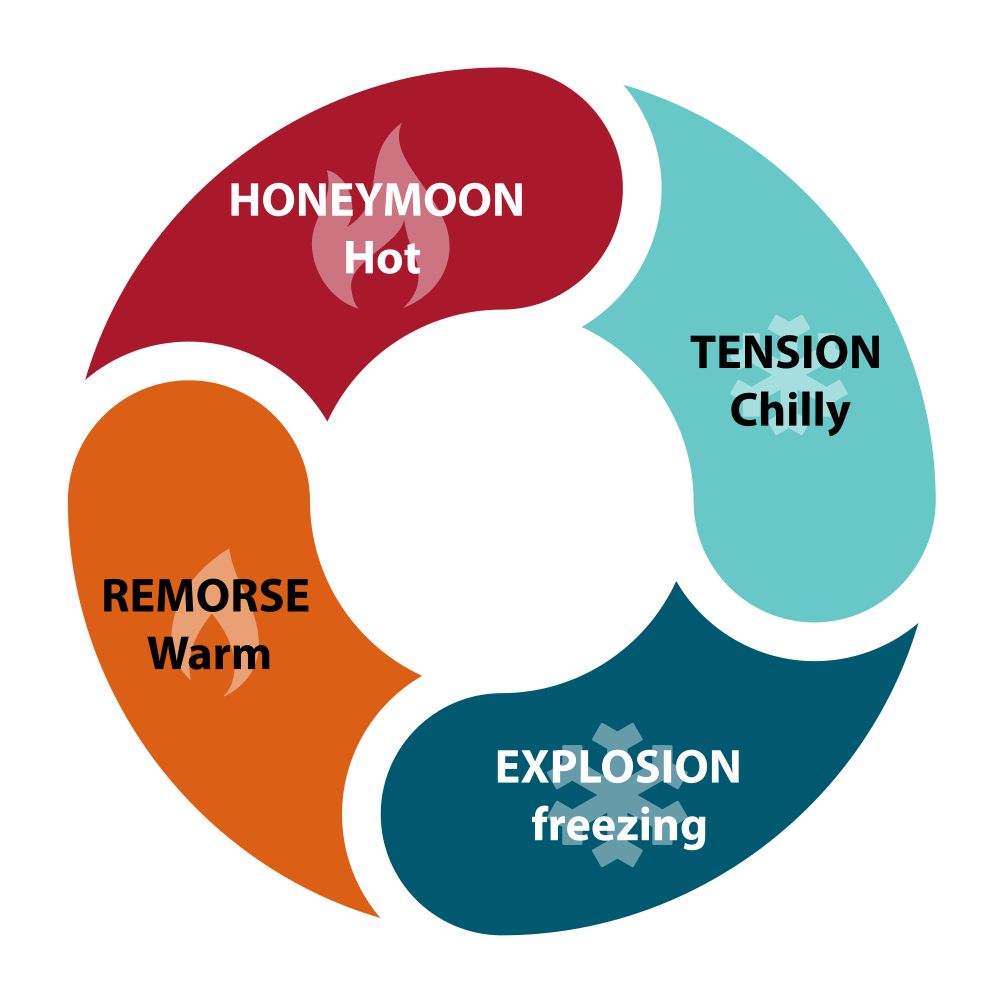

It’s the start of a relationship. You feel excited and happy with things that make you feel good like:
- AFFECTION
- ADORATION
- GIFT GIVING
- HELPFULNESS
- COMPLIMENTS

After a while, small arguments come up. You bring up issues but your partner says you’re too sensitive or you’re always making things worse. You get the silent treatment. You feel like you can’t do anything right and it might be all your fault. Partner behaviours:
- MOODY
- NITPICKING
- CRITICISMS
- THREATS
- GAS LIGHTING
- MIND GAMES

You’ve been walking on eggshells to keep your partner happy, but the tension builds to a peak and their temper finally explodes. They punish you with aggression that comes out as:
- PHYSICAL, SEXUAL, OR EMOTIONAL ABUSE

Your partner knows they went too far, but they aren’t really sorry. They try and smooth things over but you still feel something is off. To keep you close, they work hard to express:
- GUILT
- EXCUSES
- APOLOGIES
- PROMISES
They are pretty convincing and you feel like things might be ok because you see sparks of the Honeymoon Phase returning.
Can you see why this cycle makes it hard for someone to leave a bad relationship?
If you have questions about a relationship and need to talk to someone, find support below.
Support & Information
LOCAL 24HR CRISIS LINES:
- Sexual Assault Crisis Line - 519-253-9667
- Hiatus House - 519-252-7781
LOCAL SUPPORT SERVICES
Sexual Assault Crisis Centre
519-253-3100
www.saccwindsor.net
Hiatus House
519-252-7781
www.hiatushouse.com
Teen Health - Windsor Essex Community Health Centre
519-253-8481
www.wechc.org/location/teen-health
Youth Wellness Hub
519-800-8640
www.youthhubyqg.com
The House Youth Centre
519-736-6811
www.thehouseyouthcentre.com
The Bridge Youth Resource Centre (LEAMINGTON)
226-773-3454
www.thebridgeyouth.ca
New Beginnings Essex County
519-971-0973
www.newbeginningswindsor.com
Windsor Essex Child and Youth Advocacy Centre
519-995-3974
www.wecyac.ca
Victim Services of Windsor & Essex County
519-723-2711
www.vswec.ca
Legal Assistance of Windsor - Supporting Survivors of Gender Based and Sexual Violence Program
519-256-7831
www.legalassistanceofwindsor.com/gbvsa
Amani - Mental Health Support for Black Youth
519-253-8481
www.amaniservices.ca
Can-Am Indian Friendship Centre
519-253-3243
www.caifc.ca
Southwest Ontario Aboriginal Health Access Centre
519-916-1755
www.soahac.on.ca
Trans Wellness Ontario
226-674-4745
www.transwellness.ca
PHYSICAL ABUSE
Acts or threats of force or harm that cause pain or makes someone afraid.
Examples: Hitting, punching, kicking, choking, any use of physical force.
EMOTIONAL ABUSE
Acts that harm the mental or emotional health of a person.
Examples: Hurtful name calling, yelling, shaming, humiliating.
CYBER VIOLENCE
Using technology to cause fear, harm, or embarrassment.
Examples: Spying on someone or harassing online, posting information/photos of someone without permission.
HARASSMENT OR STALKING
Repeated communication or contact that makes someone feel unsafe.
Examples: Non-stop phone calls, texts or emails, repeatedly showing up to your house, secretly tracking your location.
SEXUAL ABUSE
Any unwanted intimate touch or activity, done without consent.
Examples: Pressuring or manipulating you into being touched or touching someone else.
FINANCIAL ABUSE
Behaviour used to gain power and control over a person’s money.
Examples: Taking or keeping money from someone, making you ask someone else for money.
Consent is permission to engage in any physical touch or sexual activity.
- All sexual activity without consent is a criminal offence.
- The person starting sexual activity is responsible for ensuring consent is given every time.
- Consent should never be assumed, even if a person is in a relationship or has consented to a sexual act in the past.
- Consenting to one sexual activity does NOT mean a person consents to other sexual acts.
- Someone can stop consenting at any time, for any reason.
- Consent is NOT given if someone is pressured through threats, force, or intimidation.
- Consent cannot be given if someone is drunk, high or passed out.
Unhealthy things to watch out for in relationships:
- Pressure to do unwanted sexual contact of any kind.
- Threats or causing physical harm including scratches or bruises.
- Extreme jealousy, insecurity or controlling behaviour.
- Explosive or unusual mood swings.
- Insulting, humiliating or threatening you.
- Isolating you from friends and family.
- Controlling what you can and can’t do.
- Controlling your behaviour or how you dress.
- Constantly monitoring your social media or tracking your location.
- Invading privacy and personal boundaries.
Positive qualities that build equal, healthy partnerships without abuse or violence.
SAFETY
- Make partner feel safe and comfortable expressing themselves and their likes and dislikes
RESPECT
- Listen without judgment
- Accept and understand partner’s emotions
- Value partner’s opinions
TRUST AND SUPPORT
- Support partner’s life goals
- Respect partner’s feelings, thoughts and actions
- Encourage independence and having own friendships
HONESTY & ACCOUNTABILITY
- Speak openly and honestly
- Take responsibility for your actions
- Acknowledge past use of violence
SHARE RESPONSIBILITY
- Share tasks fairly
- Be willing to support partner
- Make decisions together
FINANCIAL FAIRNESS
- Make fair financial arrangements and decisions together
- Respect partner’s financial independence
NEGOTIATION & FAIRNESS
- Find agreed upon solutions to conflicts
- Use non-violent conflict resolution
- Accept change and be willing to compromise
What to do if someone is harassing/bothering you:
- Keep track of the behaviour and take screenshots.
- Tell the person what they did is hurtful and NOT ok.
- Report person to the platform or website.
- Tell a trusted adult at home or school.
- Reach out for more help:
KidsHelpPhone.ca
1-800-668-6868, or text 686868
Call, chat or text 24/7 to speak to a trained support counsellor.
Help if someone shares or threatens to share nude images of you or someone else.
Test your knowledge!

Girls - Flip the Script with EAAA®
Girls - Flip the Script with EAAA® is a free and voluntary self-defence and empowerment program for all identifying girls ages 14-18 in Windsor and Essex County who are still in high-school.
Visit the program page for more information and contact flipthescriptwechu@uwindsor.ca to sign up for the e-mail list to be notified about upcoming workshops!