







The Windsor-Essex County Health Unit (WECHU) employs a comprehensive range of communication channels to share timely, accurate, and actionable public health information with our community. While certain channels engage specific audiences directly (such as email campaigns), others such as news releases, media engagement, and resulting media coverage extend our reach more broadly across Windsor-Essex.
The WECHU’s communication strategy is guided by two main objectives. Primarily, the WECHU’s focus is to provide the public with clear, relevant information regarding emerging or ongoing public health issues and events. To ensure this information reaches as many residents as possible, the health unit uses coordinated, multi-channel approaches that may include news releases distributed to media and subscribers, complementary social media content, and updates to the website.
A second objective is that communication items support the ongoing development of WECHU’s reputation as a trusted and recognizable source of credible health information. This includes a proactive approach to content that highlights a diverse range of health promotion topics and organizational activities. Regular educational posts on social media, paired with positive, forward‑looking news releases, help expand our reach across multiple audiences to strengthen community awareness of the WECHU’s services and expertise.
To assess the evolution of our outreach between 2024 and 2025, several performance indicators were examined. These include metrics around media requests and coverage, email campaign metrics, website traffic, and social media engagement. This analysis will help evaluate the reach and effectiveness of WECHU’s communications, identify opportunities for improvement, and guide future enhancements. The findings will also inform next steps for the Communications Department to fulfill the needs of Windsor-Essex residents in their access, understanding, and interactions with WECHU information and resources.
Communication Metrics
| Item | 2024 | 2025 | Difference |
|---|---|---|---|
| Media requests | 120 | 151 | 31 |
| Media mentions | 1,070 | 1,820 | 750 |
| Emails sent – Media | 72 | 118 | 46 |
| Emails sent (total) – Media | 4,299 | 13,615 | 9,316 |
| Emails sent – General | 110 | 158 | 48 |
| Emails sent (total) – General | 291,219 | 623,761 | 332,542 |
| Emails sent – Overall total | 317,568 | 667,028 | 349,460 |
| Webpage – visits | 586,114 | 626,054 | 39,940 |
| Webpage – unique visits | 416,656 | 390,509 | -26,147 |
| Webpage – bounce rate | 70% | 70% | - |
| Facebook followers | 17,164 | 26,406 | 9,242 |
| Facebook posts issued | 811 | 881 | 70 |
| Highest total engagement | 2,270 | 3,015 | 745 |
| Instagram followers | 1,855 | 2,192 | 337 |
| Instagram posts issued | 402 | 381 | -21 |
| Total engagement | 1,328 | 1,277 | -51 |
Data Notes:
- Total emails sent in 2024 to Media and General audiences only include those from February 19 – December 31 due to the access to historical data through our email platform.
- Overall total emails include those sent to all audiences beyond Media and General (e.g., Healthcare Providers, Childcare Operators, etc.).
- Webpage bounce rate refers to the percentage of visitors who visit a website and leave after viewing only one page. An average bounce rate in the healthcare industry is between 55 – 70% with a higher percentage demonstrating a higher rate of users exiting a site quickly.
The growth in Facebook followers is slightly inflated due to a change in the platform used to access these numbers
Communication Methods Discussion
Media
The media is one of the greatest tools to disseminate public health messaging throughout our community. As such, the WECHU solicits media attention proactively (e.g., issuing news releases, inviting the media to events, and submitting content for print) and prioritizes the response and fulfillment of incoming requests. Scheduled media monitoring also collects data related to media mentions when the WECHU was not actively involved in the request.
Media engagement is reflected below in Graph 1. Between 2024 and 2025, media requests and mentions have increased. One main factor for this increase in 2025 was the province-wide measles outbreak, which saw 150 cases in Windsor-Essex County. This resulted in an above-average quantity of communication items released (i.e., emailed exposure notifications) as well as an influx of media stories. To support the momentum gained in 2025, the WECHU has made a concerted effort to engage media agencies proactively with positive messaging and to reply to media inquiries efficiently and effectively, allowing media partners to rely on the organization as a credible and timely support for news stories.
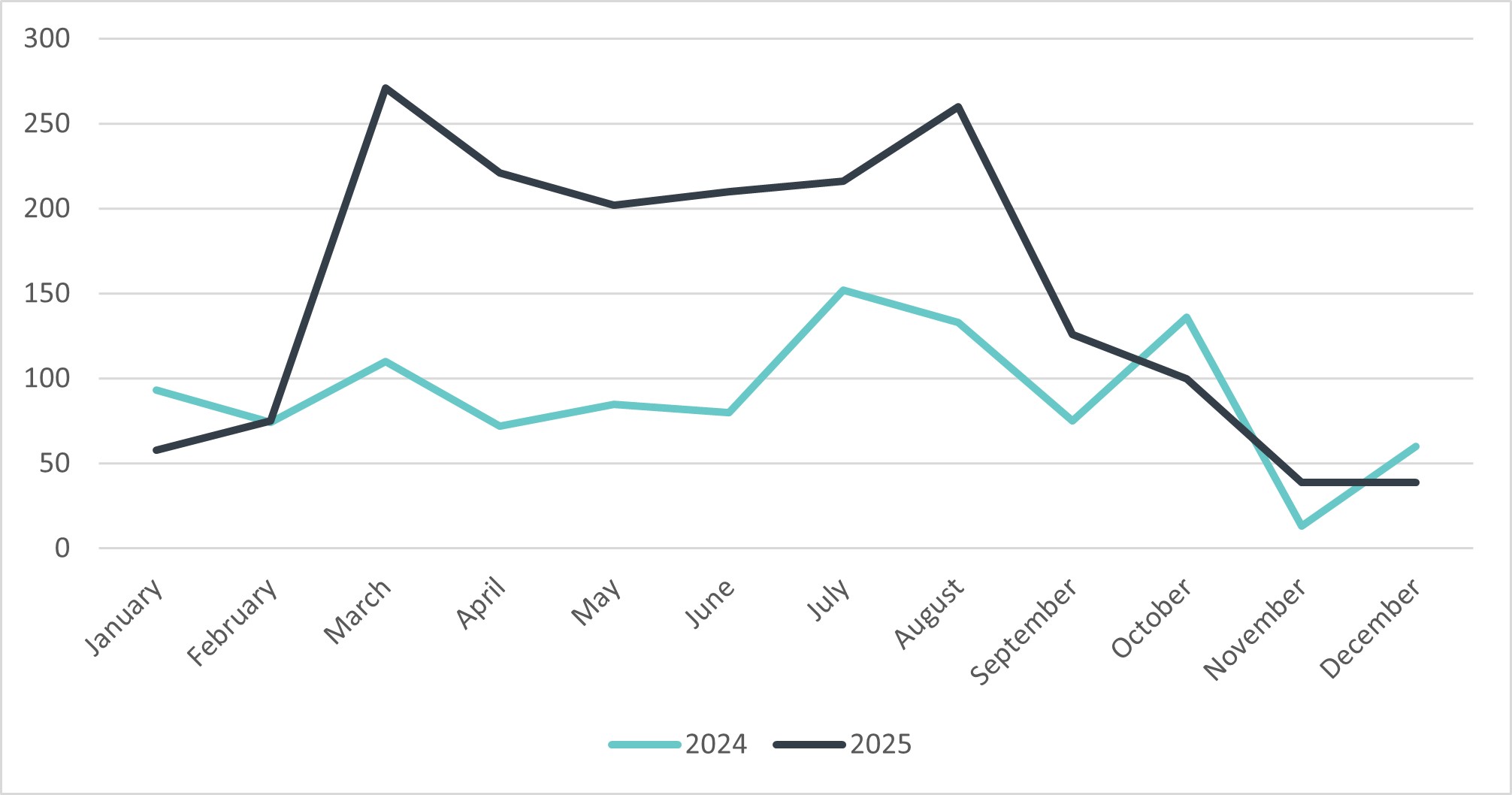
Graph 1. Media mentions in 2024 (light blue) and 2025 (black).
Looking Forward: To date in 2026, the WECHU has received more media requests than at this point in 2025 (increase of 8), demonstrating the opportunity to continue to grow in this realm. Should this trend continue, it will result in more mentions and more exposure throughout the region over the course of the year. To maintain this momentum, the Communications Department is enacting a new strategy for positive and proactive outward messaging in 2026. Specifically, the department will identify timely public health messaging for News Releases through structured engagement with WECHU departments. In doing so, external communications will be more centrally driven relative to topical community narratives, reducing the burden on departments. These proactive News Releases will focus on positive and impactful highlights of our programing, services, and health-supportive information in alignment with our plans to build trust in the community.
Email Campaigns
The WECHU utilizes the MailChimp platform to issue highly technical information to professional audiences, or for more urgent information. The platform allows for the separation of unique target “audiences” including Media, Long-Term Care and Retirement Homes, Healthcare Providers, Pharmacists, and Childcare Centre Operators.
In 2025, the WECHU issued 94 more emails to our highest utilized lists than the previous year. When looking at the total number of emails issued from our MailChimp account in 2025, there was an increase of 110% from the previous year. Similar to media engagement, the emergence of measles in the region necessitated an increase in these types of communications, in particular as it relates to providing direction or guidance to local healthcare partners.
Looking Forward: Beyond the standardized, regularly scheduled emails issued, the WECHU’s plan of issuing proactive items will see continued growth in email outreach. The past year demonstrated how the sudden emergence of an infectious disease or other health hazard can cause an unexpected and unplanned influx in the need to communicate with the community.
Web Traffic
The WECHU’s website is the hub of public health information for our region. It houses over 1000 pages of educational information by way of content pages, as well as information on classes, clinics, and professional-specific sections of the site. These content pages house the information directed to from the “calls to action” included through other communication outreach efforts (e.g., links added to social media posts and email campaigns) where the audience is directed back to the WECHU website.
Between 2024 and 2025, wechu.org saw a nearly 7% increase in visits. In this context, Visits refer to the total number of visits to the site. For example, if an individual browses four pages in the same session, it counts as one visit. When it comes to unique visits, wechu.org had more repeat visitors in 2025 than the previous year (i.e., a decrease in unique visits of 7%). Overall, the WECHU’s website remained a highly utilized tool for members of our community.
When looking at the visual of traffic on wechu.org depicted in Graph 2, there was a large spike in visits to our site in March 2025, which can be attributed to communications issued around measles exposures and updates related to the outbreak. This explains the increase in visits to the site for the year, demonstrating how the WECHU was relied upon heavily during a public health matter of significance for the community. Overall, web traffic remains consistent throughout the remainder of the year, looking at a year-to-year comparison.
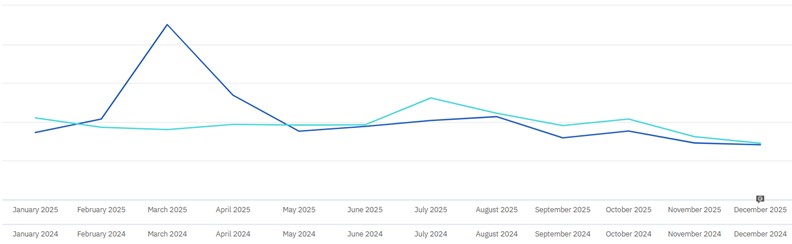
Graph 2. Website visits in 2024 (light blue) and 2025 (dark blue).
Looking forward: One of the most important, controllable, factors when it comes to websites is supporting a positive user-experience. This can be done by ensuring information is easy to find (i.e., fewer clicks needed to locate), employing key Search Engine Optimization (SEO) terms, and enhancing mobile responsiveness. Additionally, actions such as fixing broken links, examining traffic trends, streamlining content, and using visuals to break up content can further improve user experience. As such, in 2026, the Communications Department will be updating and streamlining wechu.org in both desktop and mobile versions with those functions in mind.
Social Media
The WECHU has presence on four social media platforms – Facebook, Instagram, X (Twitter), and LinkedIn. Of the four, WECHU’s largest audience is on Facebook, which is the best platform for messaging as it allows for the provision of a higher volume of information at a time, and allows for the inclusion of active links to websites.
When looking at the past two years, the WECHU has steadily grown on Facebook in terms of followers, with a 7% increase over the previous year. A well-known way to gain followers is to post regularly, and 2025 had an increase of 70 posts from the previous year. Throughout 2025, the Communications Department’s weekly social media plan included two to three posts per day, on average. This follows best practice guidelines of posting regularly but not overwhelming an audience with content, and ensuring the posts focus on quality over quantity.
In 2025, the WECHU ran 79 paid items on Facebook (including both boosted posts and advertisements). The use of paid content helps the WECHU reach users on the platforms who are outside our followers. This expanded reach can support the recruitment of new followers, making it a valuable tool in the effort to extend our message to more of our community.
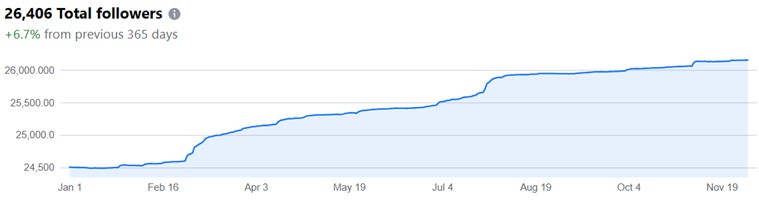
Graph 3. Increase in Facebook followers between January 1 – November 19, 2025.
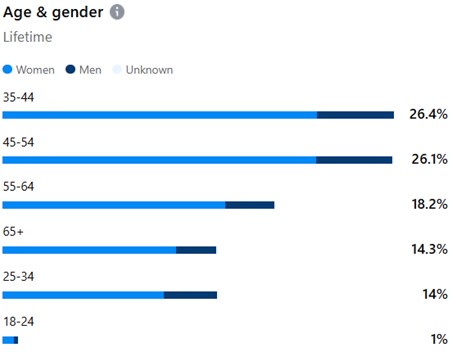
Graph 4. Snapshot of the age & gender demographics of Facebook followers.
Looking Forward: The Communications Department’s strategy with social media, namely Facebook, is to continue to issue three posts per day, on average. While generally, this content consists of our core public health messaging, in situations where urgent posts are required, other non-urgent content will be shifted accordingly. This strategy allows for important and timely public health content to remain prominent on our platforms.
In 2025, the WECHU started using Reels (short format videos), which performed very well. Moving into 2026, the plan is to release more engaging posts, including issuing more Reels featuring staff. The approach of staff-focused Reels is to give public health a more approachable and relatable persona, allowing community members to see the faces behind the work and information. Additionally, the ability for departments to boost posts and run paid advertisements on social media can continue to contribute to growth on these platforms.
Conclusion
A comparison of communication activity between 2024 and 2025 shows clear growth in the WECHU’s communication channels and outputs. Increases in the number of items issued, media requests fulfilled, and overall audience reach demonstrate strengthened engagement and support the WECHU’s commitment to ensuring that timely, credible public health information is accessible to as many residents as possible. This growth directly supports the Strategic Plan’s emphasis on strengthening transparency and improving the availability of public‑facing information for the community.
As a public health authority, the WECHU is responsible for the communication of a mix of routine, mandated messages such as beach-water testing results and organizational information, including weekly job postings. Complementing these standard items, WECHU also engages in proactive outreach to raise awareness of key health promotion topics, as well as responsive communication during emergent events such as disease outbreaks or increases in opioid-related harms. This balance of proactive and reactive efforts aligns with the WECHU’s new Strategic Plans’ focus on leading collaborative action on community health priorities and positioning the health unit as an evidence-informed leader across the health, education, and social service sectors.
Looking ahead to 2026, the WECHU will continue to strengthen its proactive communication efforts through strategically planned news releases, recurring columns, and enhanced social media engagement. These activities reflect the organization’s values of Innovation & Adaptability and Partnership & Collaboration, as well as the Strategic Priority of advancing health equity through meaningful engagement and communication. The Communications Department will collaborate with other departments to identify timely topics based on seasonality, ongoing programs and services, and other relevant health promotion topics.
By prioritizing consistent, proactive communication, the WECHU aims to enhance its visibility as a trusted and credible source of public health information. This emphasis on building trust is reinforced throughout the WECHU’s Strategic Plan, which identifies Trust as a core Value of effective public health practice. Strengthening public trust also supports efforts to counter misinformation and improve population health outcomes.
Through transparent, equity‑focused, and proactive communications, the WECHU is well positioned to support residents in making informed decisions that promote their health and well-being. Ultimately, continued growth and refinement in WECHU’s communication strategies reinforce the organization’s vision of “a healthy community where everyone can thrive.”